Carrara marble, a hallmark of elegance, graces iconic landmarks like Michelangelo’s David, as well as luxury residences and high-end commercial spaces. Quarried from the Apuan Alps in Tuscany, Italy, this natural stone is valued for its soft white base, delicate gray veining and unique charm.Like all natural stones, it needs proper care to preserve its luster and avoid damage.
This guide outlines key maintenance steps for Carrara marble countertops, floors and walls—including daily care, cleaning methods, stain removal, sealing techniques and mistakes to avoid—to keep the stone looking pristine long-term.
Before diving into maintenance practices, it’s essential to understand what makes Carrara marble unique—and why it needs special care. Unlike engineered stones like quartz, Carrara marble is a calcite-based natural stone. Calcite is a soft mineral (rating 3 on the Mohs scale of hardness, compared to quartz’s 7) and is highly susceptible to etching, staining, and scratching. Etching occurs when acidic substances (such as lemon juice, vinegar, or coffee) react with the calcite, dulling the stone’s surface. Stains happen when liquids seep into the marble’s porous structure, leaving permanent discoloration. Scratches are common due to the stone’s softness, especially in high-traffic areas.
Many homeowners and designers choose Carrara marble for its timeless appeal, but neglecting maintenance can lead to premature wear and tear. The good news is that with the right routine and products, you can protect your investment and enjoy the beauty of Carrara marble for decades. The key to successful Carrara marble maintenance is prevention, regular cleaning, and prompt action when damage occurs.
2.Daily Care Routine for Carrara Marble
The foundation of preserving Carrara marble is a simple, consistent daily care routine. By minimizing exposure to harmful substances and keeping the surface clean, you can significantly reduce the risk of damage. Here’s what you need to do:
1). Wipe Up Spills Immediately
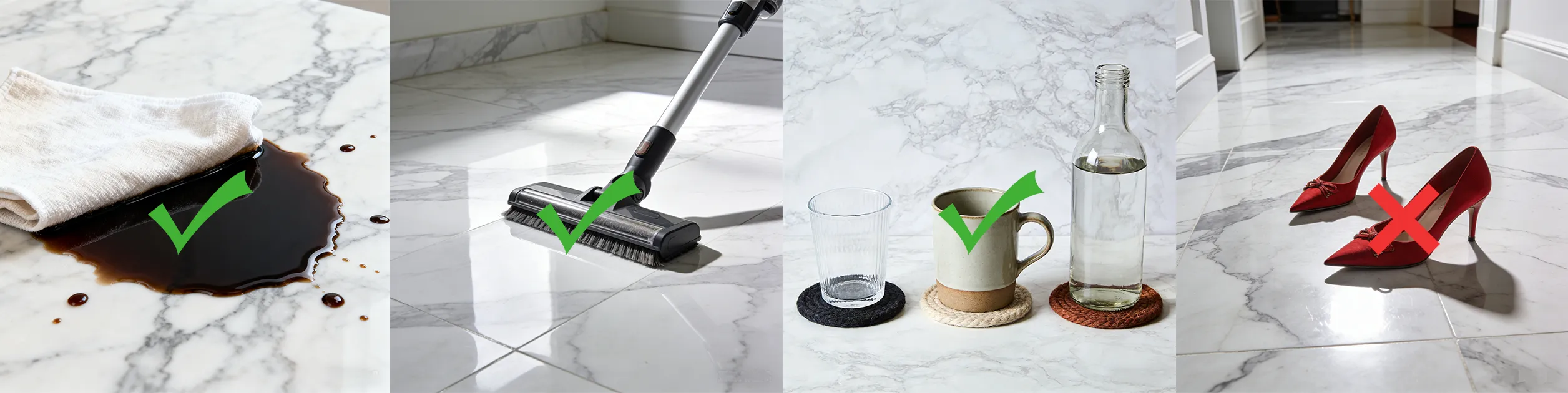
This is the most critical step in daily Carrara marble maintenance. Any liquid—especially acidic or colored liquids—can stain or etch the stone if left sitting. For example, a drop of lemon juice can etch the surface in as little as 10 minutes, while red wine or coffee can seep into the pores and leave a stubborn stain. Keep a clean, dry microfiber cloth or paper towel handy to wipe up spills as soon as they happen. Avoid using rough cloths, as they can scratch the marble.
2). Dust and Sweep Regularly
Dust, dirt, and debris can act as abrasives, scratching the surface of Carrara marble when walked on or wiped. For floors, sweep with a soft-bristle broom or use a vacuum with a brush attachment (avoid using a beater bar, which can damage the stone). For countertops and walls, dust with a dry microfiber cloth at least once a day. This simple step prevents small particles from causing long-term damage.
3). Use Coasters, Trivets, and Cutting Boards
Prevention is key when it comes to Carrara marble maintenance. Place coasters under glasses, mugs, and bottles to protect Carrara marble countertops from water rings, spills, and scratches. Use trivets or heat-resistant pads under hot pots, pans, and dishes—extreme heat can cause the marble to crack or discolor. Never cut directly on Carrara marble countertops; always use a cutting board to avoid knife scratches, which are common on this soft stone.
4). Avoid Harsh Footwear and Furniture
For Carrara marble floors, discourage walking with high heels, cleats, or shoes with sharp edges, as they can scratch or chip the stone. Attach felt pads to the bottom of furniture legs to prevent scratches when moving chairs, tables, or cabinets. This is especially important in high-traffic areas like kitchens and entryways.
3.Cleaning Carrara Marble: Do’s and Don’ts
Regular cleaning is essential, but using the wrong products can do more harm than good. Carrara marble is sensitive to acidic and abrasive cleaners, so it’s crucial to choose gentle, pH-neutral products. Here’s a breakdown of what to do and what to avoid:
Do: Use pH-Neutral Cleaners
The best cleaners for Carrara marble are pH-neutral (between 6 and 8 on the pH scale) and specifically formulated for natural stone—this is crucial for knowing how to clean Carrara marble without damage. Look for products labeled “safe for marble” or “calcite-based stone cleaner.” You can also make a DIY cleaner by mixing a few drops of mild dish soap (like Dawn) with warm water. Apply the cleaner with a soft sponge or microfiber cloth, gently wipe the surface, and then rinse thoroughly with clean water. Dry immediately with a soft cloth to prevent water spots, a common issue with improper marble cleaning.
Don’t: Use Acidic Cleaners
Acidic cleaners are the enemy of Carrara marble. They etch the surface, leaving dull spots that are difficult to repair. Avoid using any cleaner that contains vinegar, lemon, lime, orange, ammonia, or bleach. This includes common household cleaners like window cleaners, bathroom cleaners, and degreasers. Even natural products like baking soda (which is slightly alkaline) can scratch the surface if used aggressively, so use it sparingly and only for specific stain-removal tasks (more on that later).
Do: Clean in Gentle, Circular Motions
When cleaning, use gentle, circular motions to avoid scratching the marble. Never scrub aggressively, even if there’s a tough stain. Scrubbing can wear away the stone’s surface and make it more susceptible to future damage. For tough grime, let the pH-neutral cleaner sit on the surface for a few minutes (follow the product’s instructions) before wiping it away.
Don’t: Leave Water Standing
Water spots form when mineral-rich water evaporates on the marble’s surface, leaving behind deposits. To prevent this, always dry the surface thoroughly after cleaning or wiping up spills. This is especially important for countertops and bathroom surfaces, where water is more likely to accumulate.
4.Stain Removal for Carrara Marble
Even with the best prevention, stains can happen. The key to removing stains from Carrara marble is to act quickly and use the right method for the type of stain. Before attempting any stain-removal technique, test it on a small, inconspicuous area (like the back of a countertop or under a cabinet) to ensure it doesn’t damage the stone.
1). Organic Stains (Coffee, Tea, Wine, Food)
Organic stains are some of the most common on Carrara marble countertops. To remove them, create a poultice using hydrogen peroxide (3% concentration, available at drugstores) and a small amount of ammonia (only use ammonia if the stain is stubborn—test first!). Mix the two ingredients to form a thick paste, then apply it to the stain, covering it completely. Cover the poultice with plastic wrap and let it sit for 24 to 48 hours. The poultice will draw the stain out of the marble’s pores. After the time is up, remove the plastic wrap, let the poultice dry, then gently scrape it off with a plastic scraper. Wipe the area clean with a damp microfiber cloth and dry immediately.
Oil-based stains can be tricky because oil repels water. The best way to remove them is to use a poultice made of baking soda and acetone (nail polish remover). Mix the baking soda and acetone to form a thick paste, then apply it to the stain. Cover with plastic wrap and let it sit for 24 to 48 hours. The acetone will break down the oil, and the baking soda will absorb it. Remove the poultice, clean the area with a pH-neutral cleaner, and dry thoroughly. For smaller oil stains, you can also use cornstarch or talcum powder—sprinkle it on the stain, let it sit for a few hours to absorb the oil, then wipe it away.
3). Etch Marks (Acidic Spills)
Etch marks are not stains—they’re damage to the marble’s surface, and Carrara marble etching repair requires specific techniques. They appear as dull, white spots or rings, often caused by acidic spills like lemon juice or vinegar. For minor etch marks, you can use a marble polishing powder (available at home improvement stores). Mix the powder with water to form a paste, then apply it to the etch mark using a soft cloth. Rub gently in circular motions for a few minutes, then wipe away the paste and dry the area. This will polish the surface and restore the shine. For deeper etch marks or large areas of damage, it’s best to hire a professional stone restorer, as they have the tools and expertise to refinish the marble without causing further harm.
4). Rust Stains
Rust stains (from metal objects like cans, tools, or furniture) can be difficult to remove from Carrara marble. Avoid using harsh rust removers, as they often contain acids that will etch the stone. Instead, use a poultice made of oxalic acid (available at hardware stores) and water. Mix the oxalic acid with water to form a paste, apply it to the stain, cover with plastic wrap, and let it sit for 24 hours. Remove the poultice, clean the area with a pH-neutral cleaner, and dry thoroughly. Again, test this on an inconspicuous area first, as oxalic acid can lighten the marble if used incorrectly.
5.Sealing Carrara Marble: A Critical Step in Maintenance
Sealing is one of the most important aspects of Carrara marble maintenance, and choosing the best sealer for Carrara marble is key to long-term protection. Sealing creates a protective barrier on the marble’s surface, reducing its porosity and making it more resistant to stains and spills. However, it’s important to note that sealing does not prevent etching—acidic substances will still damage the surface if left sitting. Sealing also does not make the marble scratch-proof; it only helps with stain resistance.
How Often to Seal Carrara Marble for Long-Lasting Protection
The frequency of sealing depends on the location of the marble and how heavily it’s used. For high-traffic areas like kitchen countertops (which are exposed to spills, food, and daily use), you should seal the marble every 6 to 12 months. For low-traffic areas like bathroom walls or floors (that are not exposed to as many spills), sealing every 1 to 2 years is sufficient. To test if your Carrara marble needs sealing, pour a small amount of water on the surface. If the water beads up, the seal is still effective. If the water soaks into the marble within a few minutes, it’s time to reseal.
Step-by-Step Guide: How to Seal Carrara Marble Properly
Sealing Carrara marble is a simple process that you can do yourself. Here’s a step-by-step guide:
Clean the marble surface thoroughly with a pH-neutral cleaner. Make sure there are no spills, stains, or debris on the surface—sealing over dirt or stains will trap them in the stone.
Dry the surface completely with a soft cloth. The marble must be dry before sealing, as moisture can prevent the sealer from adhering properly.
Apply the sealer using a clean, lint-free cloth or a foam brush. Choose the best sealer for Carrara marble—opt for one specifically formulated for calcite-based stones (avoid sealers for granite, as they may not be suitable). Apply the sealer in a thin, even layer, covering the entire surface to ensure consistent protection.
Let the sealer sit on the surface for the time recommended by the manufacturer (usually 5 to 10 minutes). This allows the sealer to penetrate the marble’s pores.
Wipe away any excess sealer with a clean cloth. Do not let the sealer dry on the surface, as this can leave a hazy film.
Let the marble dry completely before using it. Most sealers require 24 hours of drying time, so avoid placing objects on the surface or using it during this period.
After sealing, regular inspection is key to maintaining protection. If you notice water no longer beads on the surface, it’s time to reseal—this simple check ensures your Carrara marble stays protected against stains.
For best results, use a high-quality penetrating sealer (rather than a topical sealer, which can peel or yellow over time). Penetrating sealers soak into the stone, providing long-lasting protection without altering the marble’s appearance.
6.Common Mistakes to Avoid in Carrara Marble Maintenance
Even with the best intentions, many homeowners make mistakes that damage their Carrara marble. Here are some of the most common mistakes to avoid:
1). Using Abrasive Cleaners or Tools
Abrasive cleaners (like scouring pads, steel wool, or powdered cleaners) can scratch the surface of Carrara marble, leaving permanent marks. Avoid using any product that contains grit or abrasives, and always use soft sponges or microfiber cloths for cleaning.
2). Neglecting Spills
As mentioned earlier, spills—especially acidic ones—can etch or stain the marble in minutes. Never leave a spill sitting, even if it’s just water (which can cause water spots if left to evaporate). Always wipe up spills immediately.
3). Over-Sealing the Marble
Some homeowners think that sealing the marble more often will provide better protection, but over-sealing can cause a hazy film to form on the surface. Follow the recommended sealing schedule, and only seal when the marble needs it (use the water test mentioned earlier).
4). Using Vinegar or Lemon as a Cleaner
Vinegar and lemon are often praised as natural cleaners, but they’re highly acidic and will etch Carrara marble. Never use these products to clean your marble—even diluted.
5). Placing Hot Objects Directly on the Surface
Extreme heat can cause Carrara marble to crack or discolor. Always use trivets or heat-resistant pads under hot pots, pans, and dishes.
6). Not Hiring a Professional for Major Damage
If your Carrara marble has deep scratches, large etch marks, or extensive staining, attempting to repair it yourself can make the damage worse. Professional stone restorers have the tools (like diamond polishers) and expertise to refinish the marble, restoring its original beauty.
7.Long-Term Care: Preserving Carrara Marble for Decades
With proper daily care, regular cleaning, prompt stain removal, and consistent sealing, your Carrara marble can last for decades. Below are additional long-term care tips to extend the life of your stone:
Avoid placing heavy objects on thin marble slabs (like countertops or tabletops) to prevent cracking. Use support pads under large appliances or heavy decor items.
For outdoor Carrara marble (if used in covered areas), protect it from the elements. Rainwater can contain acids that etch the stone, and freezing temperatures can cause cracking—consider a protective cover during harsh weather.
Consider having your Carrara marble professionally cleaned and polished every 2 to 3 years. This service removes minor scratches or etch marks that daily maintenance can’t fix, restoring the stone’s original luster.
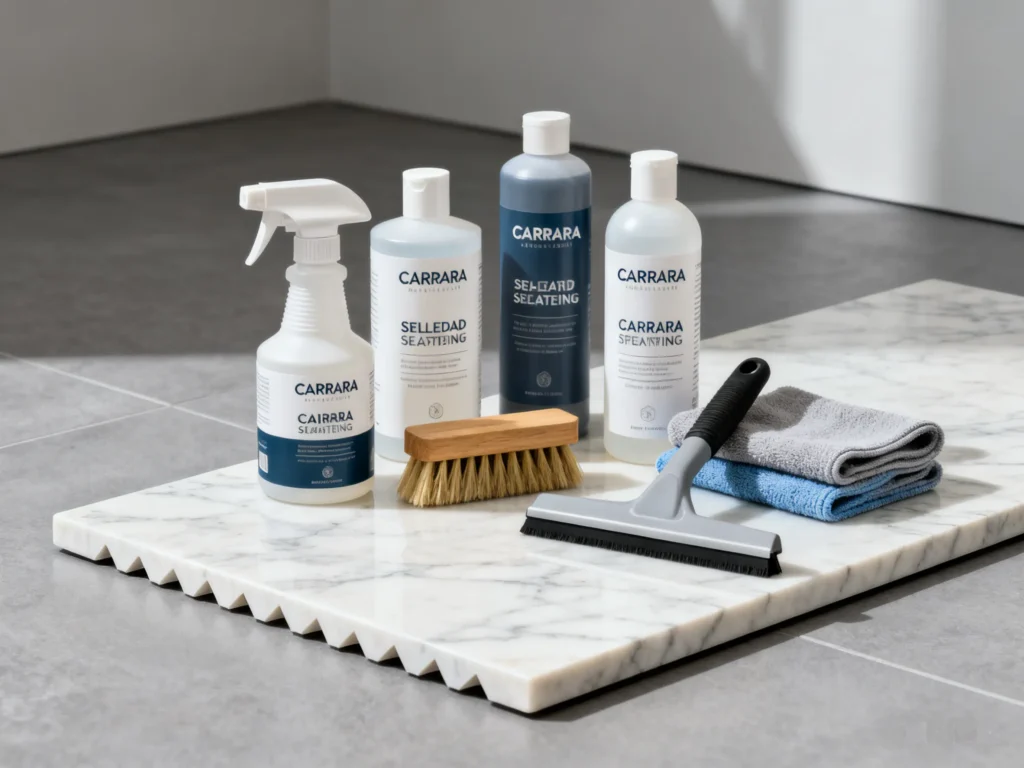
Keep a maintenance kit handy, including pH-neutral cleaner, microfiber cloths, coasters, trivets, marble polishing powder, and the best sealer for Carrara marble. This kit makes it easy to handle spills and perform regular upkeep quickly.
FAQ About Carrara Marble Maintenance
Can I use baking soda on Carrara marble?
Baking soda is slightly alkaline and can scratch Carrara marble if used aggressively. It’s only safe for spot treatment of oil-based stains (as part of a poultice) and should never be used as a daily cleaner.
How to fix deep scratches on Carrara marble?
Deep scratches require professional attention. DIY polishing powders only work on minor scratches—professional stone restorers use diamond polishers to refinish the surface without damaging the marble’s veining.
Does sealing Carrara marble prevent etching?
No, sealing only resists stains. Etching is caused by acidic substances reacting with the marble’s calcite, so prompt spill cleanup is still necessary to prevent etch marks.
Final Thoughts on Carrara Marble Maintenance
Carrara marble is a timeless investment that adds beauty and value to any space. While it requires a bit more care than engineered stones, the effort is well worth it for its unique appearance and elegance. The key to successful Carrara marble maintenance is to be proactive—prevent damage before it happens, clean regularly with gentle products, and act quickly when spills or stains occur. By following the tips in this guide, you can keep your Carrara marble looking as stunning as the day it was installed.
Remember, every piece of Carrara marble is unique—its veining and color variations make it one-of-a-kind. With proper maintenance, you’ll be able to enjoy this natural beauty for years to come. If you have any questions about caring for your Carrara marble, don’t hesitate to reach out to a professional stone care specialist—they can provide personalized advice based on your specific needs. Share your own Carrara marble maintenance tips in the comments below!